Why community partnership matters when it comes to fair cancer care
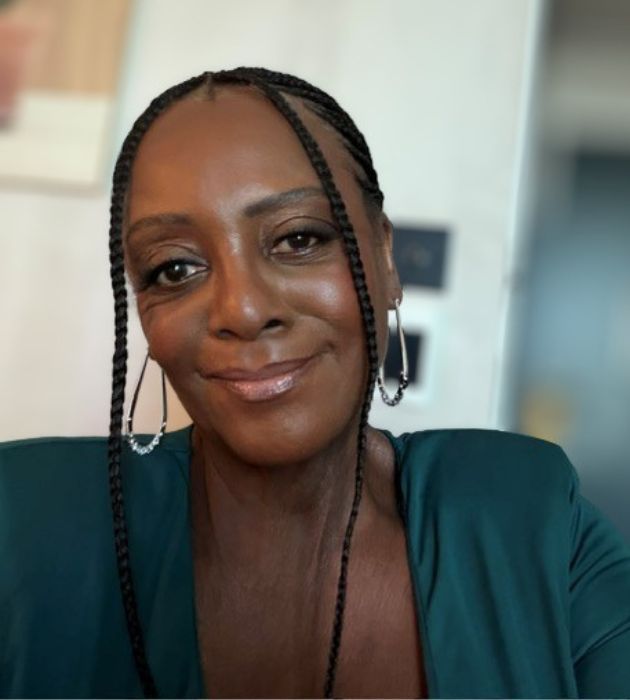
Janet Clarke, Communities Manager at Macmillan Cancer Support
If we want cancer care to be fair, we need to listen to the people who experience the greatest barriers and provide support that meets communities where they are.
At Macmillan, we know we can’t do this alone. Community organisations have expertise, insight and relationships that can enrich our understanding of what people need from cancer services, whoever and wherever they are.
They’re already on the ground, supporting communities in the ways they know will reach people the best. As a large, national cancer charity, our role is to support these efforts, strengthen capacity at the grassroots level, and act on what we learn.
This might look like Macmillan providing grants funding or connecting community groups together. It might also look like using community voices to define Macmillan’s strategy, or to support our advocacy work with governments.
But before that can happen, we must build meaningful relationships with our community groups. Trust must be earned, by consistently showing up, being upfront about how we can and can’t support, and recognising the expertise that exists within our community groups.
This is particularly important when working with community groups who have been underserved, poorly represented or even excluded in health research, services and decision-making. Inequity is felt strongly in community groups across the UK, and it’s our role to bring compassion, energy and a shared drive for change.
Recently, I’ve been working with a fantastic organisation,Touchy-Feely, who are a prime example of what good partnership can look like.
Touchy-Feely’s aim is to educate and empower women living with cancer, particularly from minority ethnic groups. Founder Nellie Gbadebo started the organisation after sharing her own experience of cancer online, having noticed a lack of Black inclusion in resources and advice she was given. From this, she has created a platform for women to use their experiences to call for better equity and representation when it comes to cancer treatment and care.
Nellie was already involved with Macmillan before we started working together, but it was we built our relationship in November 2025 at Open House, a space we co-created with Black and South Asian communities to talk about cancer, culture, and everything in between. Nellie then approached us about a Support Grant for a film she wanted to make, Radio Silence, which I immediately saw potential in, due to its aims to bring lived experience into conversations with health professionals about the additional barriers Black women can face when navigating cancer services, including around language, communication and representation.
I recently attended a screening for Radio Silence in London as part of Ethnic Minority Cancer Awareness Month. Being in the room with so many Black women, including women with lived experience of cancer and Black health professionals, made the screening particularly impactful. There were moments of real emotion, and what stayed with me was how strongly people recognised themselves and their experiences in what they were seeing and hearing.
A panel discussion afterwards created space for women to speak openly about their own experiences, while others in the room had an important opportunity to listen and learn. For me, that is exactly why this kind of partnership matters: people weren’t simply being spoken about; they were in the room, sharing their experiences and being heard.
From there, our relationship has developed naturally through regular conversations, honesty and trust. In addition, I’ve been able to find ways to connect Nellie with other community partners, which is an important part of my role – not only building individual relationships, but creating opportunities for partners to connect with one another, share their experiences and contribute to our wider work on fairer cancer care.
For us, community partnership always goes beyond a single project, and our work with Touchy-Feely won’t stop here. Their voice, and the voices of all our community partners, must be a constant across all areas of our work.
We must stay prepared to share our platform, resources and influences with organisations that are trusted by the communities we want to reach. This means maintaining open, honest dialogues, taking feedback about what is and isn’t working with gratitude, and keeping seats at the table for our community partners.
Without that, we won’t be able to make cancer care fair.
For more information about Macmillan’s partnership work with communities, visit https://www.macmillan.org.uk/advocacy/our-work/our-work-with-communities