Trauma-informed care and racialised communities
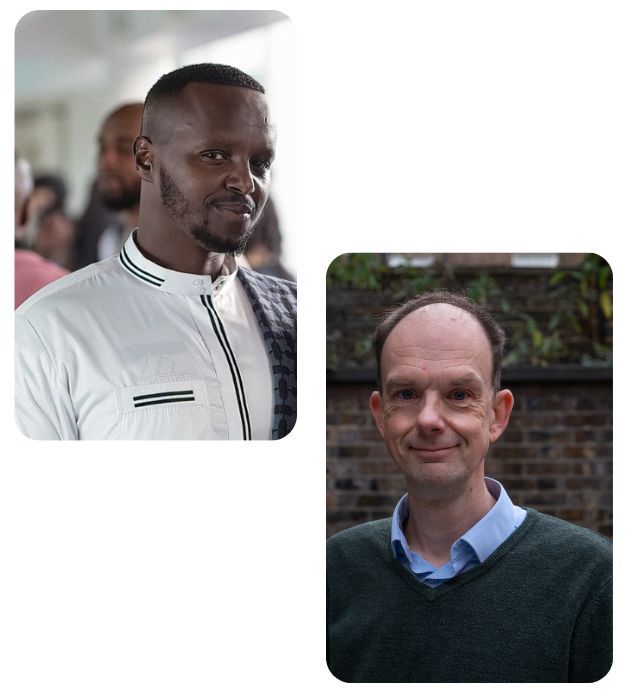
Abdirahim Hassan, Founder, Coffee Afrik CIC and Andy Bell, Chief Executive, Centre for Mental Health
- Health inequalities
- Lived experience
People from racialised communities in England continue to experience significantly higher levels of severe mental illness than white people, and this is not new. It has been clear for decades that mental health outcomes are shaped by structural inequality, and that coercive and institutional responses are disproportionately experienced by Black and minoritised communities. This is not inevitable. It is the result of deeply embedded systems of racism and injustice, shaped by histories of colonialism, migration and exclusion. The recent research carried out jointly by Centre for Mental Health and Coffee Afrik CIC, commissioned by the NHS Race and Health Observatory makes this explicit. Trauma, in this context, is not simply an individual experience but something produced and sustained by systems themselves.
At Coffee Afrik, this is something staff witness every day. As a Black-led, community-rooted organisation, Coffee Afrik’s work sits across mental health, housing, immigration, poverty and justice, responding not to isolated symptoms but to the lived realities of structural harm. Community hubs across East London have supported thousands of people navigating complex trauma, including individuals experiencing severe mental illness, displacement, housing insecurity and systemic neglect. What becomes clear is that people are not hard to reach. They have been historically excluded, misheard or harmed by the very systems meant to support them. Community spaces like this do not begin with diagnosis. They begin with trust, dignity and relationship.
The evidence from the research is clear. Racial trauma is rooted in both historical and contemporary forms of racism, including the enduring legacies of colonialism and systemic discrimination. This means that any attempt to address mental health without addressing racism will inevitably fall short. Too often, trauma-informed care is implemented in ways that remove its political meaning. It becomes procedural rather than transformative, focusing on individual coping rather than systemic accountability. But trauma-informed care, if it is to be meaningful, must be anti-racist. It must recognise that trauma is not just what happens to people, but what systems continue to do to people.
Coffee Afrik’s approach has been to build a model rooted in lived experience and collective healing. This includes community-led mental health hubs, peer-led engagement, and integrated support that connects mental health with housing, legal advice, immigration and wider life conditions. These are spaces that prioritise belonging, identity and dignity, particularly for diverse working-class communities. This approach reflects what the research highlights so clearly, that community-led care is not supplementary, it is essential. Yet it remains consistently underfunded and undervalued within the wider system. It is not simply a service. It is an alternative infrastructure of care.
If the NHS is serious about addressing racial inequality, it must move beyond consultation and towards a meaningful redistribution of power. Frameworks such as the Patient and Carer Race Equality Framework, a systemic approach to addressing racial inequity in mental health services that requires every mental health service provider to explore how it can change to meet the needs of the people from racialised communities that it serves are important steps, but they are only the beginning.
This has to be root and branch: rebuilding mental health support that is relevant, accessible, trauma-informed and anti-racist. It will take time to implement fully and make a tangible difference, but it has the potential to bring about lasting change.
Without sustained investment in community-led organisations, and without shifting decision-making power, inequity will continue to be reproduced. The research makes clear that system-wide transformation is required, not incremental change. This means resourcing community organisations as equal partners, embedding anti-racism as a core leadership responsibility, and recognising lived experience as expertise rather than anecdote.
Ultimately, this is not just about improving services. It is about reimagining them. Healing cannot happen in systems that continue to produce harm. Liberation requires more than access, it requires transformation. The work already exists within communities. The question is whether institutions are willing to listen with humility, to act with courage, and to follow that leadership.
Biographies
Abdirahim Hassan is the founder of Coffee Afrik CIC, an award-winning, lived experience-led community organisation working across Hackney and Tower Hamlets. It aims to positively influence established systems and works with and for marginalised communities in a number of ways.
Coffee Afrik currently leads nine hubs across 33 projects. These include a problematic drug use safe space for Muslims, a research lab, two award-winning youth hubs, two women’s hubs led by and for global majority folk and a systemic litigation space. Their work is inspired by principles rooted in Islam, land justice, reimagining public health, and community programming rooted in ancestral wisdom and knowledge. Coffee Afrik is designed around core values of love, care, and liberatory harm reduction.
Andy Bell is chief executive of Centre for Mental Health, an independent charity that takes the lead in challenging policies, systems and society. The Centre’s research, policy analysis, evaluations, networks and training are designed to create a mentally healthier future for all. Working in the voluntary sector for more than 25 years, Andy strives for equality and social justice through research, communicating evidence, influencing policy, and informing debate.